Chicago's Best Bat Removal
We've been voted Chicago's best bat removal company the past two years!
Get in touch
Bat Experts
Rapid Response
Trained & Educated
Licensed & Certified
About Chicago Bat Removal
Welcome to chicagobat.com. We are the only qualified bat removal company in Chicago, Illinois. Dealing with a bat infestation is work that is quite different to most other pest animal removal jobs, as the bats can fly and only eat live prey, meaning that a different approach has to be taken to get rid of these animals. As your local experienced animal removal company all of our technicians have the right skills, training and equipment to be able to deal with a bat infestation effectively. Hiring a company that has a long positive reputation for dealing with these kinds of animal infestations will also give you extra peace of mind that your problem will be resolved promptly, and you can see plenty of reviews online from our satisfied customers. All of our team work hard to make sure that your bat infestation is dealt with to your satisfaction, and we can usually offer a call out with one of our technicians within 24 hours. You can also be confident that we will never use toxic chemicals such as poisons to deal with the bats in your attic, as we know that exclusion is the most effective way of dealing with a bat infestation. We also know that you are likely to be concerned about disease transmission, so all our staff have the right protective equipment, but they can also offer a full cleaning and sanitization service once the bats have been removed. This cleaning service will involve a fumigation of the attic space with a disinfectant that will kill any harmful spores or particles remaining from the guano the bats have left behind. We operate 24-7-365, so don't hesitate to call us at 872-888-0064 to discuss your bat problem and schedule a fast appointment.
Residential
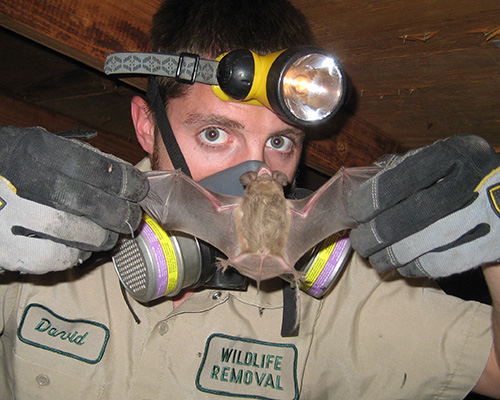
We are experts at removing bats from residential properties. Whether you have a single bat trapped in your house, a colony roosting in your attic, and/or various other problems, there is no need to worry! During our removal process, we make sure to inspect your entire home carefully, tracking down all the entrypoints bats are using to invade your place. Next, we perform a process called live exclusion (where no bats are harmed and all exit your property), then seal all entry holes completely shut. We also take care of the cleanup process after, so your home is safe and clean!
Learn MoreCommercial
Besides residential areas, we also have a wealth of experience removing bats from commercial properties! We begin by investigating the area for possible bat entrances, covering holes even as small as 1/4 of an inch. Through our live exclusion process, bats leave the building through one-way exits, and we seal up every hole afterward. Once the bats have been removed, we perform a cleanup process. This includes dealing with guano, replacing damaged insulation, and decontaminating the place.
Learn More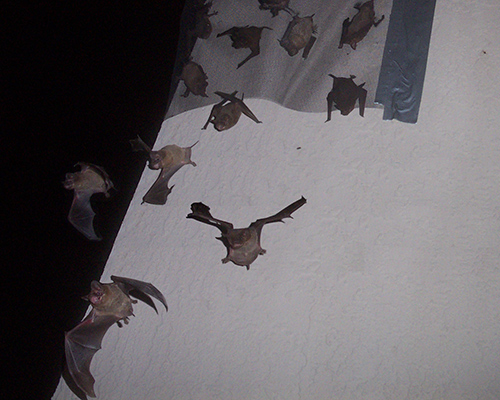
Contact us for bat removal today!
What Our Customers Say
I had a bat flying around in my house at 9pm, and CITY bat removal came right out and caught it in a net.
Sarah Lakewood
I had an annoying colony of bats stuck in my attic for a while before I finally decided to call for help. They were able to quickly and thoroughly solve the problem!
Brandon Chung
They did a great job clearing my attic of bats and didn't hurt any of the creatures.
Charlotte Demers
The technicians at CITY Bat Removal are skilled, professional, and know exactly what they're doing. Would highly recommend.
Mark O'Connor
My house stank of bats and their guano inside my wall. CITY Bat Removal not only removed the bats, they also got rid of the smell!
Alexis Ramirez
.jpg)
Do Bats Migrate? Where Do Bats Live in the Winter?
Winter brings about many changes for people. We tend to stay inside to avoid cold weather or bundle up and spend the day in the snow. We have developed methods to cope with the cold in North America. Nature did not leave bats out of the equation when giving them the question of whether to migrate or hibernate. Bats have such a wide variety of species and developed the ability to do both. Their bodies are highly adaptable for migration and hibernation, and even some members of a given bat species do the opposite of the majority.
What Are Migration and Hibernation?
Migration means the bats travel from one location to another in preference for better weather conditions, mating habits, and food sources. Hibernation means shutting down the body functions to use less energy than if the bats were awake and flying. There are as many as 1,300 species of bats across the globe. There are such vast differences even within the same species. Most bats that hunt in one area migrate a relatively short distance to get to winter hibernation sites.
Which Do Bats Do?
Some bats have been known to hibernate for up to 9 months with only a couple of grams of stored fat. Others migrate long distances across the continent. Several smaller colonies of similar bats find the same handful of caves to hibernate further north than in their southern summer active season. They hibernate in those particular caves because the atmosphere and temperature are controlled and consistent year-round. Banding together, they create hibernaculas with hundreds of thousands of bats.
Hibernacula
Other hibernacula locations are really open to what the species of bat needs. Many with extremely specific temperature needs are becoming endangered because their hibernation locations are being disturbed or destroyed. Caves and old mine shafts can create the right mix of air movement, consistent temperatures, and reliable humidity. Bats only arouse during hibernation to drink and urinate.
With the right combination of factors, water condensates on the walls and their fur. Several species arouse multiple times every 12-19 days, but if the weather gets colder, they can go as long as 80 days without rousing if they need to.
Active Winter Bats
Bats' bodies are covered in fur. Their wings are skin-like membranes between their forelimbs and their body. The design for their wings is focused on dexterity while flying to hunt. They are not specifically designed for speed or distance, which means hibernation can take priority for many of them. Some bats have thicker fur and other methods of staying warm. One species uses its lengthened and wide tail as a blanket of sorts to stay warm. Others do not require such strict control of temperature and, so long as they have food, they can keep warm on their own in trees. Those who are more consistently active and only use torpor as a method of survival migrate to warmer climates like birds.
Both Functions Are Common
Generally, a bat can both migrate and hibernate even if they only do one of those during cold months. The same species that migrates across the continent can choose to hibernate instead. There are benefits to changing the existing behavior of the majority. Preliminary research suggests that some males hibernate while the rest of the species migrates. The theory is they will have first access to returning females for mating in early spring. Bats can enter torpor during cold spells, even if they were active during the warmer winter days before.
More than Cave Exploration
Caves are just one aspect of hibernation, but many bats utilize spaces all over. The eaves of a house can be a temporary place for them to rest during migration. Trees with good coverage overhead can work too. Attics can become maternity colony roosts if the right conditions are met.
Many bat hibernation sites are at risk. Changes can cause the loss of bat populations. Some species' layover caves can be just as important in their survival. Having dedicated locations to be safe in between winter and summer roosts can make a difference in population.
Most states have laws against dealing with bats in an inhumane way. They are vital to the ecosystem and thus many are protected. Even the ones who are not specifically listed at your local wildlife department are still bats and need to be handled with care.